
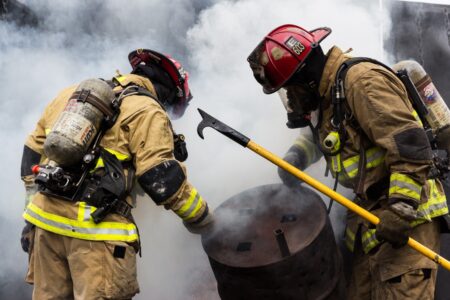
Cancer remains one of the most significant threats to fire fighters. According to the National Institute for Occupational Safety and Health (NIOSH), fire fighters are 9% more likely to develop cancer and 14% more likely to die of cancer than the general population.
Physical activity represents one of the most effective and accessible ways fire fighters can combat their risk. Higher levels of physical activity are associated with a 7-20% lower risk of at least 13 cancer types. Several cancers have a dose-response relationship whereby the more active you are, the lower your risk!
Learn how exercise ignites biological mechanisms that prevent and fight cancer.
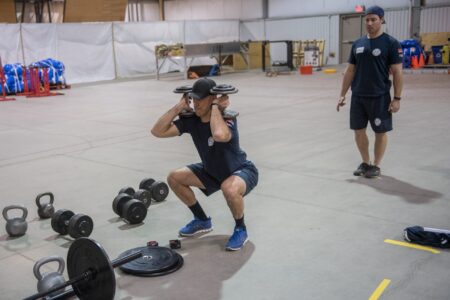
Additional exercise-related resources, including sample workouts, exercise programming, and more!
Cancer support and materials specifically for fire fighters, including how to interpret cancer risks, a healthcare provider’s guide to fire fighter physicals, and more!

Before exploring the evidence, take a moment to understand why this resource was created and how to get the most from it. The sections below outline the need to prioritize exercise as a key cancer-prevention strategy in the fire service, explain why regular physical activity and exercise are powerful tools for reducing cancer risk and improving outcomes, and provide considerations for navigating the eBook based on your needs and interests.
A call to action
⇒ Cancer is a leading cause of line-of-duty deaths among fire fighters.
⇒ Physical Activity is a potent cancer-prevention strategy that is often under-utilized.
⇒ Outcomes beyond health: cost and operational benefits.
⇒ Institutional call to formalize, fund, and implement comprehensive cancer-prevention programs that prioritize physical activity.
⇒ Physical Activity is a potent cancer-prevention strategy that is often under-utilized.
⇒ Outcomes beyond health: cost and operational benefits.
⇒ Institutional call to formalize, fund, and implement comprehensive cancer-prevention programs that prioritize physical activity.

Why exercise is critical to the fight against cancer
⇒ Fire fighters experience higher cancer rates than the general population.
⇒ Physical activity reduces the risk of developing 13 cancers – several of which disproportionately affect fire fighters.
⇒ Exercise improves treatment outcomes and reduces the risk of developing new cancers and diseases among cancer survivors.
⇒ Exercise creates a cancer-suppressive internal environment, reducing opportunities for aggressive mutation.“If the effects of exercise could be encapsulated in a pill, it would be prescribed to every cancer patient and viewed as a major breakthrough.”
⇒ Physical activity reduces the risk of developing 13 cancers – several of which disproportionately affect fire fighters.
⇒ Exercise improves treatment outcomes and reduces the risk of developing new cancers and diseases among cancer survivors.
⇒ Exercise creates a cancer-suppressive internal environment, reducing opportunities for aggressive mutation.
—
—
“If the effects of exercise could be encapsulated in a pill, it would be prescribed to every cancer patient and viewed as a major breakthrough.”
– Dr. Pru Cormie
How to use this resource
⇒ The resource is for all fire fighters, whether you’re active-duty or retired, career or volunteer, or working in structural,
wildland, industrial, military, or Indigenous settings.
⇒ It was designed as an educational resource to raise awareness of the critical role of physical activity and exercise in reducing
cancer risk and in managing cancer.
⇒ The eBook is divided into three parts:
wildland, industrial, military, or Indigenous settings.
⇒ It was designed as an educational resource to raise awareness of the critical role of physical activity and exercise in reducing
cancer risk and in managing cancer.
⇒ The eBook is divided into three parts:
_____1. Understanding the risk of cancer in the fire service
_____2. The role of physical activity and exercise in cancer prevention and management
_____3. Evidence, guidelines, and recommendations for specific cancer types
⇒ Ultimately, this resource is meant to be used however works best for you: read it cover to cover or jump to the sections
most relevant to your interests and needs.
Being more active more often is one of the most powerful things anyone can do to manage cancer risk or navigate survivorship.

Fire fighters face a unique combination of occupational exposures and personal risk factors that increase their risk of cancer. Understanding which risks are unavoidable, which can be modified, and how they interact is the first step toward reducing cancer risk and making informed decisions about prevention. Explore the sections below to learn more about cancer in the fire service, non-modifiable risk factors, and modifiable risk factors.
Click a topic to dive in or click the ‘Explore this Section!’ button to learn more.
1a. An overview of cancer in the fire service
⇒ Fire fighter LODD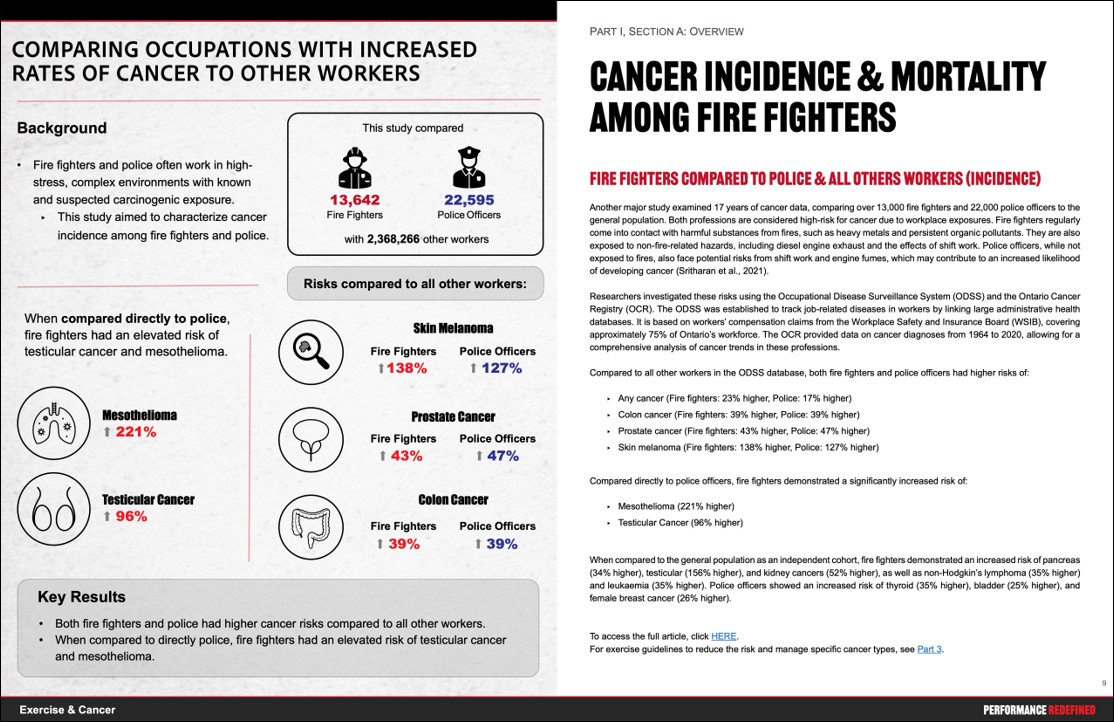
⇒ Cancer incidence & mortality among fire fighters
⇒ Key research timeline
⇒ IARC (re)classification of firefighting
⇒ National Firefighter Registry (NFR) for Cancer
⇒ Collaborations & success stories
⇒ Cancer incidence & mortality among fire fighters
⇒ Key research timeline
⇒ IARC (re)classification of firefighting
⇒ National Firefighter Registry (NFR) for Cancer
⇒ Collaborations & success stories

1b. Non-modifiable risk factors
⇒ Occupational exposure to carcinogens
⇒ Night shift work & sleep disturbances
⇒ Job-related stress & burnout
⇒ Sex, race, and genetics
⇒ Night shift work & sleep disturbances
⇒ Job-related stress & burnout
⇒ Sex, race, and genetics
1c. Modifiable risk factors
⇒ Improper use of PPE
⇒ Tobacco use (smoking, smokeless tobacco, vaping)
⇒ Alcohol consumption
⇒ Poor dietary habits
⇒ Excess bodyweight
⇒ Excess visceral fat
⇒ Prolonged sedentary behavior“Excess body weight (overweight or obesity) is associated a higher risk of developing 13 types of cancer”
⇒ Tobacco use (smoking, smokeless tobacco, vaping)
⇒ Alcohol consumption
⇒ Poor dietary habits
⇒ Excess bodyweight
⇒ Excess visceral fat
⇒ Prolonged sedentary behavior
“Excess body weight (overweight or obesity) is associated a higher risk of developing 13 types of cancer”
– The American Cancer Society

Physical activity and exercise are not just tools for improving fitness or job performance – they are powerful strategies for reducing cancer risk, improving treatment outcomes, and enhancing quality of life after a cancer diagnosis. Research continues to show that physical activity influences many of the biological, behavioral, and occupational risk factors affecting fire fighters, while structured exercise and higher levels of fitness provide additional protective benefits.
The following sections define key exercise-related concepts, summarize the evidence linking physical activity and exercise to specific cancer risk factors, and outline current recommendations for cancer prevention and survivorship. Together, they provide an evidence-informed foundation for why physical activity is a powerful cancer prevention strategy and why exercise is one of the most effective non-pharmacological therapies available, activating the body’s natural cancer-fighting systems.
“If exercise could be packaged in a pill, it would be the single most widely prescribed and beneficial medicine in the nation.”
– National Institute on Aging
Click a topic to dive in or click the ‘Explore this Section!’ button to learn more.
2a. Defining key terms & research timeline
⇒ Physical activity, exercise & fitness
⇒ Cardiorespiratory fitness
⇒ Muscular fitness
⇒ Key research timeline
⇒ Cardiorespiratory fitness
⇒ Muscular fitness
⇒ Key research timeline
2b. Evidence of exercise for specific cancer risk factors
⇒ Visceral fat
⇒ Excess body weight
⇒ Dietary habits
⇒ Smoking
⇒ Smokeless tobacco
⇒ Alcohol use
⇒ Stress reduction
⇒ Sleep
⇒ Detoxification
_____• Exercise & PFAS
_____• Exercise & POPs
________• Benzine
________• Arsenic
_____• Exercise & heavy metals
_____• Exercise-induced sweat & detoxification
⇒ Exercise-induced mechanisms
⇒ Excess body weight
⇒ Dietary habits
⇒ Smoking
⇒ Smokeless tobacco
⇒ Alcohol use
⇒ Stress reduction
⇒ Sleep
⇒ Detoxification
_____• Exercise & PFAS
_____• Exercise & POPs
________• Benzine
________• Arsenic
_____• Exercise & heavy metals
_____• Exercise-induced sweat & detoxification
⇒ Exercise-induced mechanisms
2c. Physical activity & exercise guidelines for cancer risk reduction & survivorship
⇒ An Introduction to Guidelines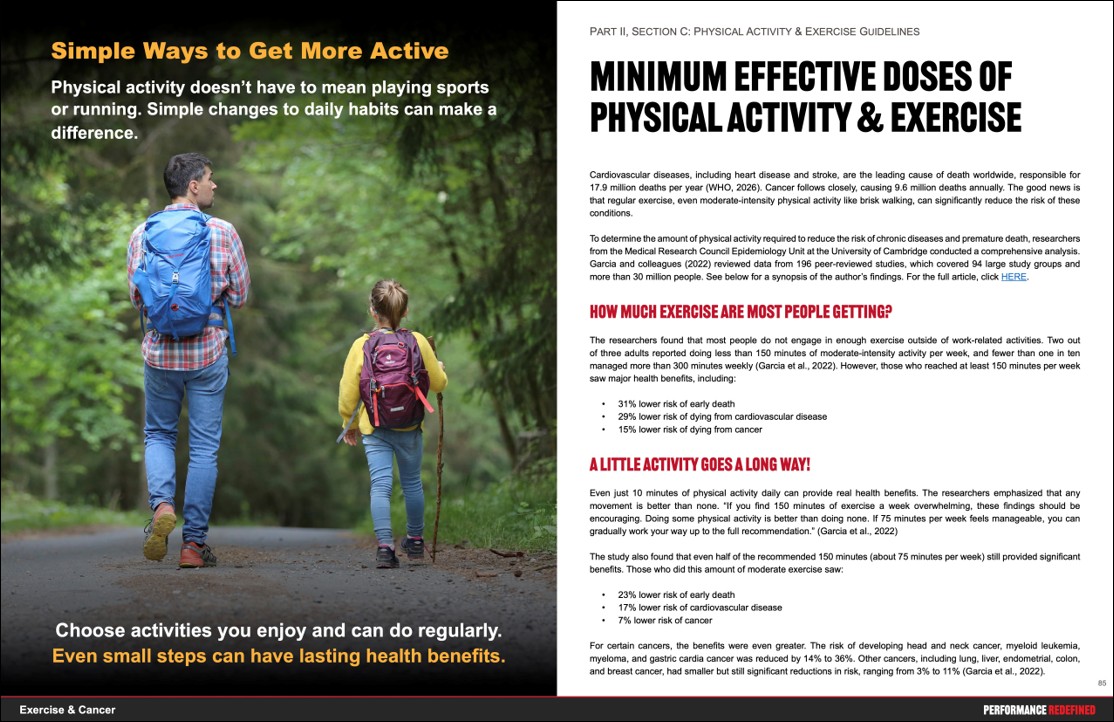
⇒ Physical Activity Guidelines for Cancer Risk Reduction
_____• American Cancer Society
_____• American College of Sports Medicine
_____• Canadian Society for Exercise Physiology
⇒ Exercise Guidelines for Cancer Survivorship
_____• American Cancer Society
_____• American College of Sports Medicine
_____• Exercise & Sports Science Australia
_____• Cancer Care Ontario
⇒ Exercise Program Considerations for Cancer Survivors
⇒ Effects of Exercise on Health-Related Outcomes in Cancer Survivors
⇒ Interpreting & Meeting Physical Activity Guidelines
⇒ Minimum Effect Dose of Physical Activity and Exercise
⇒ Safety Reference Guide to Exercise
⇒ Position Statement: Exercising in Turnout Gear and Apparatus Bays“Adults should participate in a range of physical activities in a variety of environments and contexts across all seasons.”
⇒ Physical Activity Guidelines for Cancer Risk Reduction
_____• American Cancer Society
_____• American College of Sports Medicine
_____• Canadian Society for Exercise Physiology
⇒ Exercise Guidelines for Cancer Survivorship
_____• American Cancer Society
_____• American College of Sports Medicine
_____• Exercise & Sports Science Australia
_____• Cancer Care Ontario
⇒ Exercise Program Considerations for Cancer Survivors
⇒ Effects of Exercise on Health-Related Outcomes in Cancer Survivors
⇒ Interpreting & Meeting Physical Activity Guidelines
⇒ Minimum Effect Dose of Physical Activity and Exercise
⇒ Safety Reference Guide to Exercise
⇒ Position Statement: Exercising in Turnout Gear and Apparatus Bays
“Adults should participate in a range of physical activities in a variety of environments and contexts across all seasons.”
– The Canadian Society for Exercise Physiology

Every cancer is different, but the evidence is increasingly clear: regular physical activity and structured exercise can help reduce cancer risk, improve treatment outcomes, and enhance quality of life for cancer survivors. Explore the 14 cancer types featured below to learn how firefighting affects cancer risk, what the research says about exercise, and the practical guidelines and recommendations to help you be more active, more often.
Click a topic to dive in or click the ‘Explore this Section!’ button to learn more.
3. Cancer types
⇒ Bladder Cancer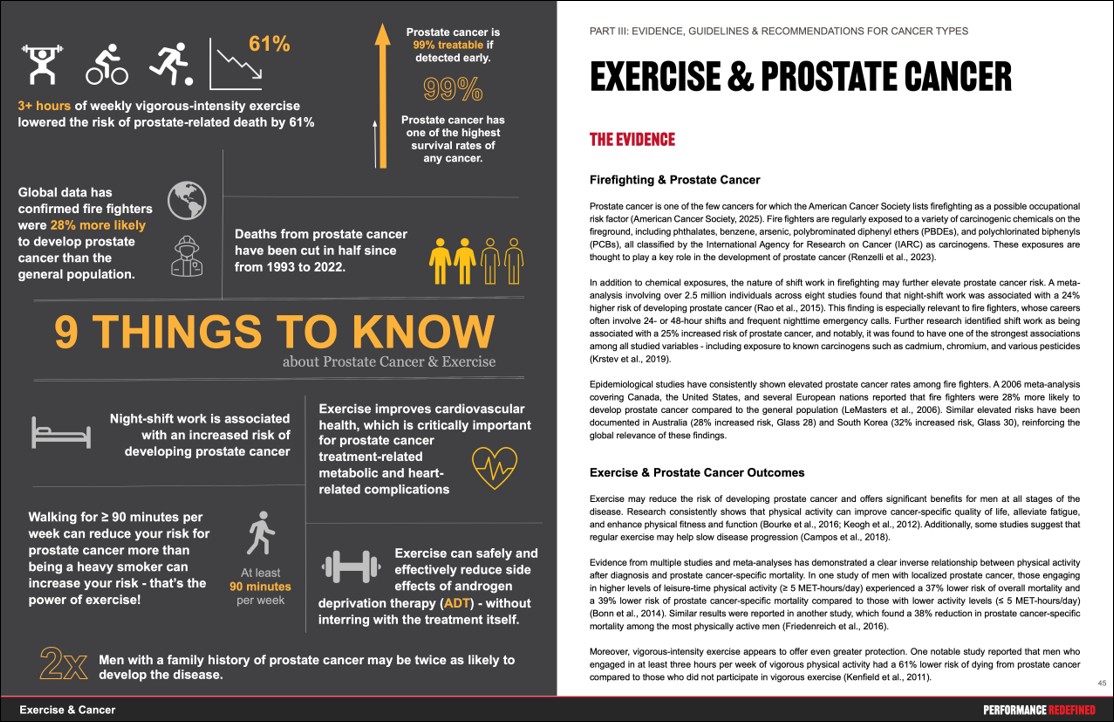
⇒ Brain Cancer
⇒ Breast Cancer
⇒ Colorectal Cancer
⇒ Esophageal & Gastric (Stomach) Cancers
⇒ Kidney Cancer
⇒ Lung Cancer
⇒ Mesothelioma
⇒ Non-Hodgkin’s Lymphoma
⇒ Prostate Cancer
⇒ Sex-Specific Reproductive Cancers
⇒ Testicular Cancer“Exercise awakens the body’s own medicine to treat cancer.”
⇒ Brain Cancer
⇒ Breast Cancer
⇒ Colorectal Cancer
⇒ Esophageal & Gastric (Stomach) Cancers
⇒ Kidney Cancer
⇒ Lung Cancer
⇒ Mesothelioma
⇒ Non-Hodgkin’s Lymphoma
⇒ Prostate Cancer
⇒ Sex-Specific Reproductive Cancers
⇒ Testicular Cancer
“Exercise awakens the body’s own medicine to treat cancer.”
– Dr. Robert Newton

The resources below are designed to help you turn the exercise and cancer-related evidence and guidelines presented throughout this eBook into action. Whether you are seeking exercise guidance, implementation tools, or trusted fire fighter- and cancer-specific organizations, these appendices provide evidence-informed materials to support you on your journey.
Click a topic to dive in or click the ‘Explore this Section!’ button to learn more.
A1. Exercise-related materials & resources
⇒ Medical Clearance Prior to Exercise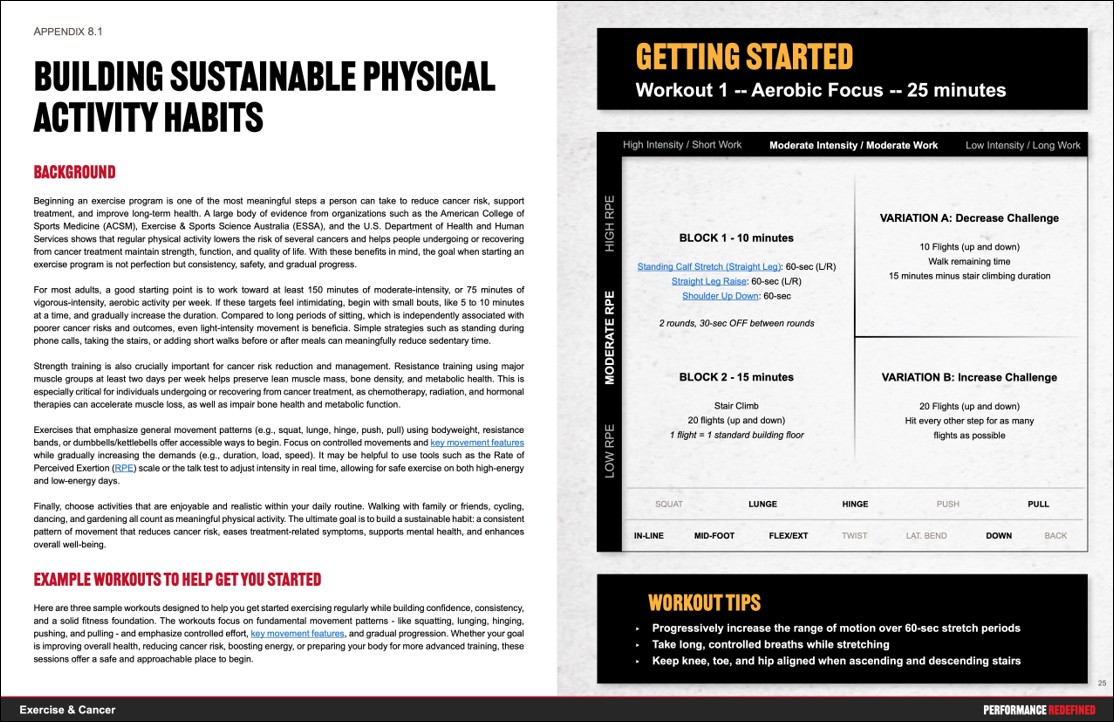
⇒ How Departments Can Help
⇒ Overcoming Barriers to Activity
⇒ Making Time to Move
⇒ Exercising Safely and Effectively
⇒ Exercise Anywhere!
⇒ Sample Workouts
⇒ Know Your METs
⇒ Fit To Thrive (F2T)
⇒ How Departments Can Help
⇒ Overcoming Barriers to Activity
⇒ Making Time to Move
⇒ Exercising Safely and Effectively
⇒ Exercise Anywhere!
⇒ Sample Workouts
⇒ Know Your METs
⇒ Fit To Thrive (F2T)
A2. Cancer and fire fighter-related materials & resources
⇒ How Cancer Risks Are Calculated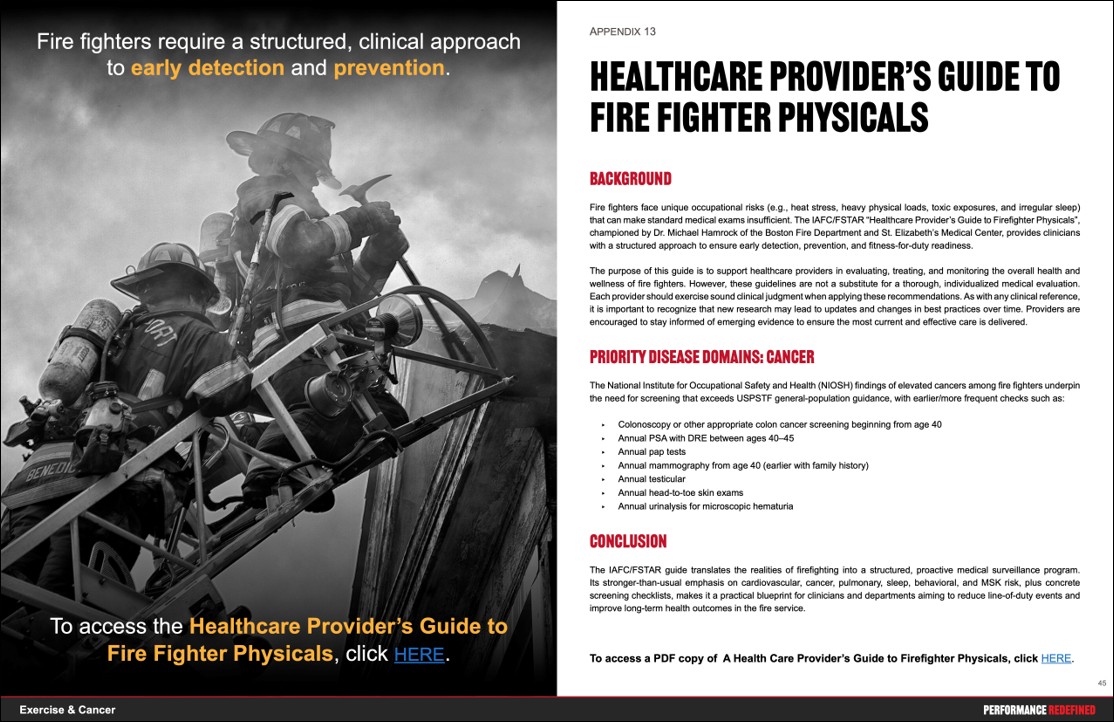
⇒ Absolute vs. Relative Risk
⇒ The Healthcare Provider’s Guide
⇒ Pre-Physical PREP Guide for Early Cancer Detection and Prevention
⇒ Questions And Answers
⇒ Cancer Awareness Factsheets
⇒ The Canadian Cancer Society Resources
⇒ Absolute vs. Relative Risk
⇒ The Healthcare Provider’s Guide
⇒ Pre-Physical PREP Guide for Early Cancer Detection and Prevention
⇒ Questions And Answers
⇒ Cancer Awareness Factsheets
⇒ The Canadian Cancer Society Resources
Before exploring the evidence, take a moment to understand why this resource was created and how to get the most from it. The sections below outline the need to prioritize exercise as a key cancer-prevention strategy in the fire service, explain why regular physical activity and exercise are powerful tools for reducing cancer risk and improving outcomes, and provide considerations for navigating the eBook based on your needs and interests.
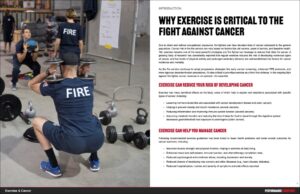
A call to action
⇒ Cancer is a leading cause of line-of-duty deaths among fire fighters.
⇒ Physical Activity is a potent cancer-prevention strategy that is often under-utilized.
⇒ Outcomes beyond health: cost and operational benefits.
⇒ Institutional call to formalize, fund, and implement comprehensive cancer-prevention programs that prioritize physical activity.
⇒ Physical Activity is a potent cancer-prevention strategy that is often under-utilized.
⇒ Outcomes beyond health: cost and operational benefits.
⇒ Institutional call to formalize, fund, and implement comprehensive cancer-prevention programs that prioritize physical activity.
Why exercise is critical to the fight against cancer
⇒ Fire fighters experience higher cancer rates than the general population.
⇒ Physical activity reduces the risk of developing 13 cancers – several of which disproportionately affect fire fighters.
⇒ Exercise improves treatment outcomes and reduces the risk of developing new cancers and diseases among cancer survivors.
⇒ Exercise creates a cancer-suppressive internal environment, reducing opportunities for aggressive mutation.“If the effects of exercise could be encapsulated in a pill, it would be prescribed to every cancer patient and viewed as a major breakthrough.”
⇒ Physical activity reduces the risk of developing 13 cancers – several of which disproportionately affect fire fighters.
⇒ Exercise improves treatment outcomes and reduces the risk of developing new cancers and diseases among cancer survivors.
⇒ Exercise creates a cancer-suppressive internal environment, reducing opportunities for aggressive mutation.
—
—
“If the effects of exercise could be encapsulated in a pill, it would be prescribed to every cancer patient and viewed as a major breakthrough.”
– Dr. Pru Cormie
How to use this resource
⇒ The resource is for all fire fighters, whether you’re active-duty or retired, career or volunteer, or working in structural,
wildland, industrial, military, or Indigenous settings.
⇒ It was designed as an educational resource to raise awareness of the critical role of physical activity and exercise in reducing
cancer risk and in managing cancer.
⇒ The eBook is divided into three parts:
wildland, industrial, military, or Indigenous settings.
⇒ It was designed as an educational resource to raise awareness of the critical role of physical activity and exercise in reducing
cancer risk and in managing cancer.
⇒ The eBook is divided into three parts:
_____1. Understanding the risk of cancer in the fire service
_____2. The role of physical activity and exercise in cancer prevention and management
_____3. Evidence, guidelines, and recommendations for specific cancer types
⇒ Ultimately, this resource is meant to be used however works best for you: read it cover to cover or jump to the sections
most relevant to your interests and needs.
Being more active more often is one of the most powerful things anyone can do to manage cancer risk or navigate survivorship.
Fire fighters face a unique combination of occupational exposures and personal risk factors that increase their risk of cancer. Understanding which risks are unavoidable, which can be modified, and how they interact is the first step toward reducing cancer risk and making informed decisions about prevention. Explore the sections below to learn more about cancer in the fire service, non-modifiable risk factors, and modifiable risk factors.
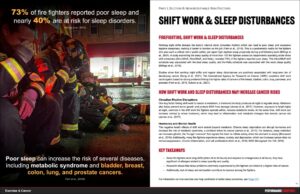
1a. An overview of cancer in the fire service
⇒ Fire fighter LODD
⇒ Cancer incidence & mortality among fire fighters
⇒ Key research timeline
⇒ IARC (re)classification of firefighting
⇒ National Firefighter Registry (NFR) for Cancer
⇒ Collaborations & success stories
⇒ Cancer incidence & mortality among fire fighters
⇒ Key research timeline
⇒ IARC (re)classification of firefighting
⇒ National Firefighter Registry (NFR) for Cancer
⇒ Collaborations & success stories
1b. Non-modifiable risk factors
⇒ Occupational exposure to carcinogens
⇒ Night shift work & sleep disturbances
⇒ Job-related stress & burnout
⇒ Sex, race, and genetics
⇒ Night shift work & sleep disturbances
⇒ Job-related stress & burnout
⇒ Sex, race, and genetics
1c. Modifiable risk factors
⇒ Improper use of PPE
⇒ Tobacco use (smoking, smokeless tobacco, vaping)
⇒ Alcohol consumption
⇒ Poor dietary habits
⇒ Excess bodyweight
⇒ Excess visceral fat
⇒ Prolonged sedentary behavior“Excess body weight (overweight or obesity) is associated a higher risk of developing 13 types of cancer”
⇒ Tobacco use (smoking, smokeless tobacco, vaping)
⇒ Alcohol consumption
⇒ Poor dietary habits
⇒ Excess bodyweight
⇒ Excess visceral fat
⇒ Prolonged sedentary behavior
“Excess body weight (overweight or obesity) is associated a higher risk of developing 13 types of cancer”
– The American Cancer Society
Physical activity and exercise are not just tools for improving fitness or job performance – they are powerful strategies for reducing cancer risk, improving treatment outcomes, and enhancing quality of life after a cancer diagnosis. Research continues to show that physical activity influences many of the biological, behavioral, and occupational risk factors affecting fire fighters, while structured exercise and higher levels of fitness provide additional protective benefits.
The following sections define key exercise-related concepts, summarize the evidence linking physical activity and exercise to specific cancer risk factors, and outline current recommendations for cancer prevention and survivorship. Together, they provide an evidence-informed foundation for why physical activity is a powerful cancer prevention strategy and why exercise is one of the most effective non-pharmacological therapies available, activating the body’s natural cancer-fighting systems.
“If exercise could be packaged in a pill, it would be the single most widely prescribed and beneficial medicine in the nation.”
– National Institute on Aging
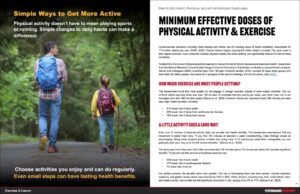
2a. Defining key terms & research timeline
⇒ Physical activity, exercise & fitness
⇒ Cardiorespiratory fitness
⇒ Muscular fitness
⇒ Key research timeline
⇒ Cardiorespiratory fitness
⇒ Muscular fitness
⇒ Key research timeline
2b. Evidence of exercise for specific cancer risk factors
⇒ Visceral fat
⇒ Excess body weight
⇒ Dietary habits
⇒ Smoking
⇒ Smokeless tobacco
⇒ Alcohol use
⇒ Stress reduction
⇒ Sleep
⇒ Detoxification
_____• Exercise & PFAS
_____• Exercise & POPs
________• Benzine
________• Arsenic
_____• Exercise & heavy metals
_____• Exercise-induced sweat & detoxification
⇒ Exercise-induced mechanisms
⇒ Excess body weight
⇒ Dietary habits
⇒ Smoking
⇒ Smokeless tobacco
⇒ Alcohol use
⇒ Stress reduction
⇒ Sleep
⇒ Detoxification
_____• Exercise & PFAS
_____• Exercise & POPs
________• Benzine
________• Arsenic
_____• Exercise & heavy metals
_____• Exercise-induced sweat & detoxification
⇒ Exercise-induced mechanisms
2c. Physical activity & exercise guidelines for cancer risk reduction & survivorship
⇒ An Introduction to Guidelines
⇒ Physical Activity Guidelines for Cancer Risk Reduction
_____• American Cancer Society
_____• American College of Sports Medicine
_____• Canadian Society for Exercise Physiology
⇒ Exercise Guidelines for Cancer Survivorship
_____• American Cancer Society
_____• American College of Sports Medicine
_____• Exercise & Sports Science Australia
_____• Cancer Care Ontario
⇒ Exercise Program Considerations for Cancer Survivors
⇒ Effects of Exercise on Health-Related Outcomes in Cancer Survivors
⇒ Interpreting & Meeting Physical Activity Guidelines
⇒ Minimum Effect Dose of Physical Activity and Exercise
⇒ Safety Reference Guide to Exercise
⇒ Position Statement: Exercising in Turnout Gear and Apparatus Bays“Adults should participate in a range of physical activities in a variety of environments and contexts across all seasons.”
⇒ Physical Activity Guidelines for Cancer Risk Reduction
_____• American Cancer Society
_____• American College of Sports Medicine
_____• Canadian Society for Exercise Physiology
⇒ Exercise Guidelines for Cancer Survivorship
_____• American Cancer Society
_____• American College of Sports Medicine
_____• Exercise & Sports Science Australia
_____• Cancer Care Ontario
⇒ Exercise Program Considerations for Cancer Survivors
⇒ Effects of Exercise on Health-Related Outcomes in Cancer Survivors
⇒ Interpreting & Meeting Physical Activity Guidelines
⇒ Minimum Effect Dose of Physical Activity and Exercise
⇒ Safety Reference Guide to Exercise
⇒ Position Statement: Exercising in Turnout Gear and Apparatus Bays
“Adults should participate in a range of physical activities in a variety of environments and contexts across all seasons.”
– The Canadian Society for Exercise Physiology
Every cancer is different, but the evidence is increasingly clear: regular physical activity and structured exercise can help reduce cancer risk, improve treatment outcomes, and enhance quality of life for cancer survivors. Explore the 14 cancer types featured below to learn how firefighting affects cancer risk, what the research says about exercise, and the practical guidelines and recommendations to help you be more active, more often.
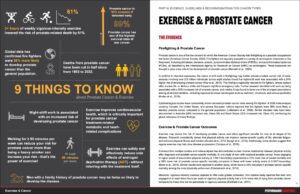
3. Cancer types
⇒ Bladder Cancer
⇒ Brain Cancer
⇒ Breast Cancer
⇒ Colorectal Cancer
⇒ Esophageal & Gastric (Stomach) Cancers
⇒ Kidney Cancer
⇒ Lung Cancer
⇒ Mesothelioma
⇒ Non-Hodgkin’s Lymphoma
⇒ Prostate Cancer
⇒ Sex-Specific Reproductive Cancers
⇒ Testicular Cancer“Exercise awakens the body’s own medicine to treat cancer.”
⇒ Brain Cancer
⇒ Breast Cancer
⇒ Colorectal Cancer
⇒ Esophageal & Gastric (Stomach) Cancers
⇒ Kidney Cancer
⇒ Lung Cancer
⇒ Mesothelioma
⇒ Non-Hodgkin’s Lymphoma
⇒ Prostate Cancer
⇒ Sex-Specific Reproductive Cancers
⇒ Testicular Cancer
“Exercise awakens the body’s own medicine to treat cancer.”
– Dr. Robert Newton
The resources below are designed to help you turn the exercise and cancer-related evidence and guidelines presented throughout this eBook into action. Whether you are seeking exercise guidance, implementation tools, or trusted fire fighter- and cancer-specific organizations, these appendices provide evidence-informed materials to support you on your journey.
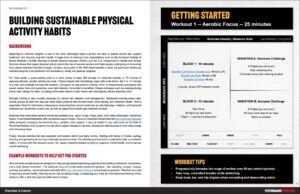
A1. Exercise-related materials & resources
⇒ Medical Clearance Prior to Exercise
⇒ How Departments Can Help
⇒ Overcoming Barriers to Activity
⇒ Making Time to Move
⇒ Exercising Safely and Effectively
⇒ Exercise Anywhere!
⇒ Sample Workouts
⇒ Know Your METs
⇒ Fit To Thrive (F2T)
⇒ How Departments Can Help
⇒ Overcoming Barriers to Activity
⇒ Making Time to Move
⇒ Exercising Safely and Effectively
⇒ Exercise Anywhere!
⇒ Sample Workouts
⇒ Know Your METs
⇒ Fit To Thrive (F2T)
A2. Cancer and fire fighter-related materials & resources
⇒ How Cancer Risks Are Calculated
⇒ Absolute vs. Relative Risk
⇒ The Healthcare Provider’s Guide
⇒ Pre-Physical PREP Guide for Early Cancer Detection and Prevention
⇒ Questions And Answers
⇒ Cancer Awareness Factsheets
⇒ The Canadian Cancer Society Resources
⇒ Absolute vs. Relative Risk
⇒ The Healthcare Provider’s Guide
⇒ Pre-Physical PREP Guide for Early Cancer Detection and Prevention
⇒ Questions And Answers
⇒ Cancer Awareness Factsheets
⇒ The Canadian Cancer Society Resources